
Senior Living Trends Archives – Page 5 of 5 – Varsity Branding

Tag: Senior Living Trends

Soon, older adults will have access to a breakthrough new tool to improve their quality of life. Mohammad Mahoor, PhD, director of the computer vision and social robotics laboratory at the University of Denver, has spent the last decade working with his students to create and refine an amazingly lifelike, socially assistive robot named Ryan, which can provide deep social interaction and companionship to people living alone.

Designed to address challenges of aging — like dementia, depression and loneliness — this “companionbot” can recognize faces and emotions, express feelings, hold conversations and remember individual comments for future interactions to build a relationship over time. Ryan’s face is expressive and lifelike; she can turn her head to react to voices and movement, and her torso contains a screen for playing music and games, watching videos, looking at photos and doing other activities. Ryan’s next iteration will also have active arms so she can coach people in light exercises to improve their physical fitness.

In a pilot study, six residents at Eaton Senior Communities in Lakewood, Colorado, had 24/7 access to Ryan in their apartments for a period of 4–6 weeks. Ryan was customized for each participant, with photos for an album, daily schedules, favorite music and topics of interest for YouTube video searches. Participants could call Ryan by the name of their choice.

Observations, interviews and analyses revealed that the residents established rapport with the robot and greatly valued and enjoyed having a companionbot in their apartment. They also believed that the robot helped them maintain their schedule, improved their mood and stimulated them mentally. One user shared that, “She [Ryan] was just enjoyable. We were SAD to see her go.”

After the staff at Eaton Senior Communities told me how thrilled the residents were with their experiences with Ryan, I spoke with Dr. Mahoor about his invention.


 Wayne: Why did you create Ryan?

Dr. Mahoor: We wanted to address the needs of older people living with dementia, loneliness and depression. There is a shortage of caregivers, and care is expensive — Ryan is a great form of companionship. She can help seniors lead better lives at home.


Wayne: Can you talk about the testing process?

Dr. Mahoor: The first round of testing, in 2016, was a six-month, piloted study at Eaton Senior Communities. All of the features were not ready, the cognitive games were simple, and the speech recognition had some glitches — but we received very positive feedback. After making changes, we did two more pilot studies this year. One focused on how Ryan can help people with dementia through cognitive behavioral therapy. The second pilot study was totally autonomous. Users had half an hour of interaction with Ryan for 3–4 weeks to test the emotion recognition technology.


Wayne: Were there any surprises when people first began interacting with Ryan?

Dr. Mahoor: At first, we had a fear that people wouldn’t like Ryan. But even in the early stages, they reacted very positively. We noticed that the more time they spent talking with Ryan, the more they enjoyed it, and they wanted her to tell them more stories and jokes — even gossip! When we took the robot away from one of the residents, he literally cried. The bond was so strong that he was very sad. It was really surprising for me that a robot could make such a huge impact on people’s lives. I didn’t expect that much of a connection between machine and human.


Wayne: What challenges did you face when test-driving Ryan?
Dr. Mahoor: One of the challenges is that you have to be patient because multiple people cannot talk to Ryan at the same time — you have to take your turn so that she can listen and understand you.


Wayne: What kinds of results have you had?

Dr. Mahoor: When we measured mood and depression before, during and after phase one of our study, we found that Ryan significantly improved users’ moods and lessened their depression.


Wayne: What’s next for Ryan?

Dr. Mahoor: We received a National Institutes of Health (NIH) grant for phase one, and now we are in transition to phase two. NIH has approved our next grant from a scientific perspective. Now it just needs to approve the budget. Phase two would be a grant of over a million dollars to help us study Ryan’s impact on the progression of dementia.


Wayne: How unique is Ryan?

Dr. Mahoor: There are other robots out there, but this is the first one developed with features customized to help with depression and dementia through social conversations, games and other interactions.


Wayne: When will Ryan be available on the market?

Dr. Mahoor: We are very close; I’m hoping by the end of the year. We’ve started working with investors to begin production. Users love Ryan, the feedback has been positive, and we’ve made improvements. It’s time to go to market to fulfill our mission of helping the health care industry.


Wayne: How much will she cost?

Dr. Mahoor: Manufacturing each Ryan costs thousands, so to make her more cost-effective, we have a subscription-leasing plan in mind. The cost would be about $400 per month for individuals, but if a corporation wanted to lease multiple Ryans, the rate would adjust. One Ryan can be reprogrammed to serve multiple residents.


Wayne: What would you say to people who worry that robots will take over the world?

Dr. Mahoor: Ryan is going to complement the time and support of caregivers and help make their lives easier — not take over and replace them.


Wayne: Are you surprised at where you are today?

Dr. Mahoor: Yes. When we first started several years ago, I didn’t think we’d be in a position to commercialize the invention; I didn’t think we’d be a startup meeting with investors. I’m so happy about our progress. For us to be in a position to bring a robot to market that’s going to improve health care and impact people’s lives for the better is amazing.


Learn more about Dr. Mahoor’s companionbot, Ryan, at Dreamfacetech.com.


As we head into 2019, we look back on an exciting year for the Varsity blog! Here’s a countdown of our most popular posts for 2018. It’s a potpourri of topics, from serious to humorous to touching. One common thread: innovative ways of helping people age well, from a world-renowned village for people experiencing dementia to LEGOs.

  1. Older Adults Experiencing Homelessness Inspired by an experience our president Wayne Langley had passing an underpass in Los Angeles, this three-part series provides insights into how older individuals experiencing homelessness are treated. Read the first installment here.
  1. Difficulties in Diagnosing Parkinson’s Disease  In this guest post, Rebecca Evans of geriatric nursing.org discusses the second most common age-related disease after Alzheimer’s, including the lack of a precise screening test and why early diagnosis is so important. Read it here.
  1. Remembering Sal J. Molite, Jr.  Derek Dunham, vice president of client services at Varsity, pays his respects to Sal J. Molite, Jr., former president of Edenwald Communities in Towson, Maryland, who sadly passed away in January 2018. He was a true friend and colleague, who had a passion and dedication for the aging services. Read the post.
  1. American Hogeweyk — an Interview with UMC’s Larry Carlson Varsity spoke with Larry Carlson, President and CEO of United Methodist Communities, on his fascinating experience visiting Hogeweyk, the world-famous memory support community in The Netherlands. Read the post.
  1. Playing with LEGOs Could Help Older Adults Our most-read post of the year came from Robinson Smith, Varsity creative director and lover of all toys and games. Rob discusses Adult Fans of Legos (AFOLS), many of whom are older adults who use Legos to engage in a creative exercise for the mind. Read the post.

That’s our countdown of top posts for 2018! Stay tuned for more fresh perspectives in 2019, and please contact us  if there’s a topic or issue you’d like us to cover.


A couple of weeks ago, we wrote about how some historically faith-based communities are reevaluating their market positioning as it relates to their faith affiliations. While some organizations are distancing themselves from their faith-based roots, others are doubling down on their heritage. From our experience, this choice often boils down to perceptions around inclusivity. Marketers are trying to strike a balance between showing that their community is “open to all” while at the same time remaining loyal to their strong base of consumers that might strongly value a faith connection. The perceptions around inclusivity and exclusivity drive many of these marketing decisions, yet there is a trend within senior living to create communities that are selectively exclusive — and they are gaining traction.

Topic published a piece profiling the Motion Picture & Television Country House and Hospital. Located about 20 miles north of Los Angeles, a stone’s throw from Mulholland Drive, this community attracts exactly who you would expect: individuals who have retired from the entertainment industry. According to the article, the community has 230 residents living in a mix of residential options, from cottages to apartments to higher levels of care. If you look at the names of the streets and buildings, you’re likely to notice several that you might know — Spielberg Drive, the Jodie Foster Aquatic Pavilion and the Louis B. Mayer Theatre all top the list. The Motion Picture & Television Country House and Hospital is one of those communities that is, at its core, selectively exclusive. By this, we mean that the individuals who choose to move to the community value its connection to the arts & entertainment and want to be immersed in that world. Individuals who don’t care for those interests aren’t likely to make such a move. Thus, through self-choice, the community creates an exclusive atmosphere that attracts a specific niche in the market. In short, the community may be open to everyone, but it isn’t trying to be the best fit for everyone.

Another great example of this trend is Margaritaville. When this community was announced in 2017, it created an incredible buzz around the senior living space. Developed by Latitude, there are now three Margaritaville properties from which to choose — all demonstrating an incredible attention to detail. Choosing to move to one of these communities is like living your life in a Jimmy Buffett song. While some might call this paradise, others aren’t so enamored. Just as with the Motion Picture & Television Country House and Hospital, the residents of these communities are self-selecting to spend time with other like-minded people. They don’t want the community to appeal to the broadest possible audience; rather, they just want it to appeal to individuals who hold the same values and lifestyles that they do. If you can’t enjoy a cheeseburger in paradise with them, then Margaritaville isn’t for you.

To round out our examples, we also need to share the story of Legends Landing. Currently under development on the campus of the Pro Football Hall of Fame in Canton, Ohio, this community has been specifically designed to support the needs of retired professional football players, coaches, officials and administrators. Included with this development is the Player Care Center, which provides a range of health care services and includes 143 independent living, assisted living and memory care accommodations. Surely, the future of this community looks bright, as the NFL is one of the most important brands in America today. It’s only a matter of time before NFL superfans will want to reside at this community, surrounded by players and in an atmosphere that lives and breathes the sport of football. If that’s not your cup of tea, then Legends Landing probably isn’t your preferred retirement destination.

All of this is to say that niche retirement communities that fully embrace their brands are having a sort of renaissance. At one time, these niches revolved around memberships in churches and community organizations. As those groups have dwindled, the communities they built have had to open their doors wider to keep census high. Meanwhile, affinity communities — such as those based on careers and hobbies — are seeing an uptick in interest. In a way, these communities are no more inclusive than some of the faith-based communities of a hundred years ago. If you don’t have a personal affiliation or affinity with the brand, the cultural fit just isn’t going to be there.

As senior living marketers, we’re keeping an eye on these trends because we believe that there is much to be learned from them. Could pivoting an existing community to appeal to a specific affinity group make it a more desirable retirement destination? Or do these types of communities only work if they are developed from the ground up? And, we certainly don’t know if communities like these are going to be able to continue their attraction in the long term. The affinity groups that appeal to today’s potential residents may fall flat with the next generation. Only time will tell.

At Varsity, we often get asked, “What’s the next big thing in senior living?” One trend that we keep hearing about is the “hybrid home.” After seeing the growth of this model over the last year or so, we believe that it’s going to become a part of the product mix for many communities over the next decade. Now’s the time to learn about this innovation in home design and find a way to work it into your next community expansion or remodeling!

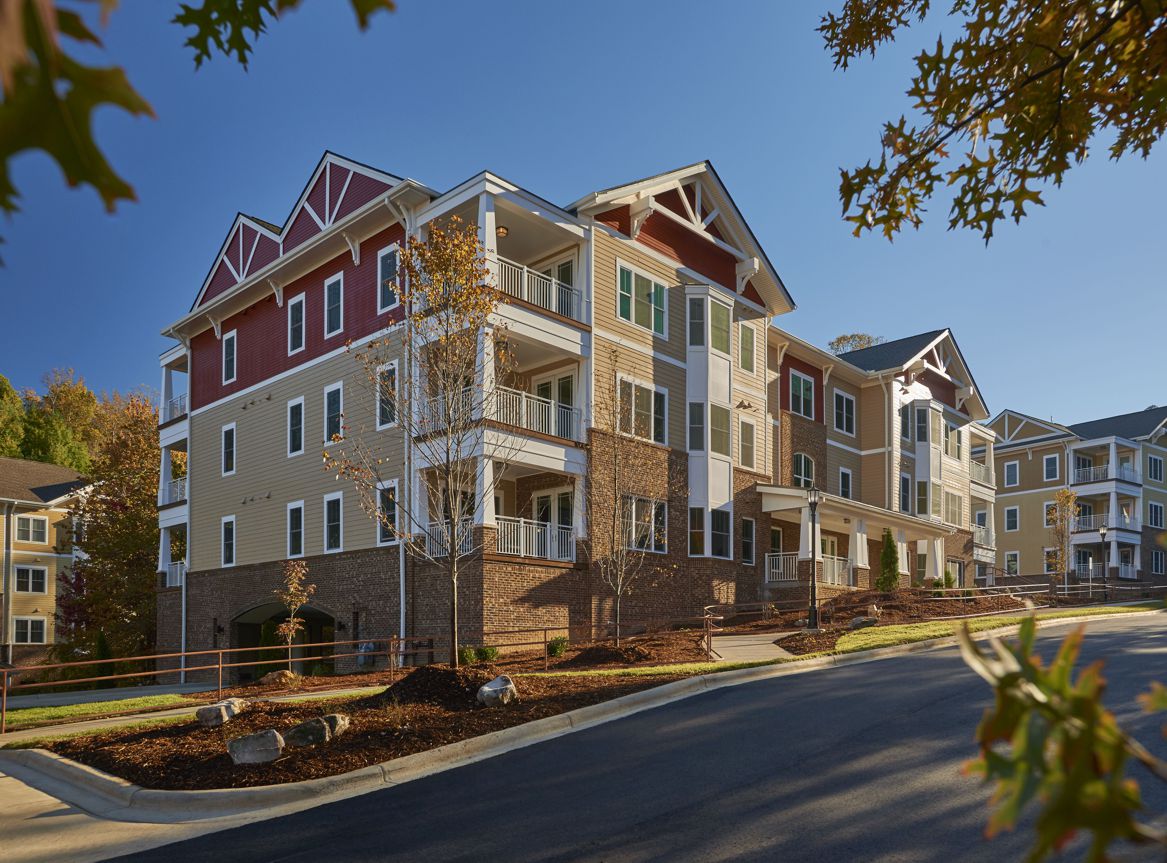
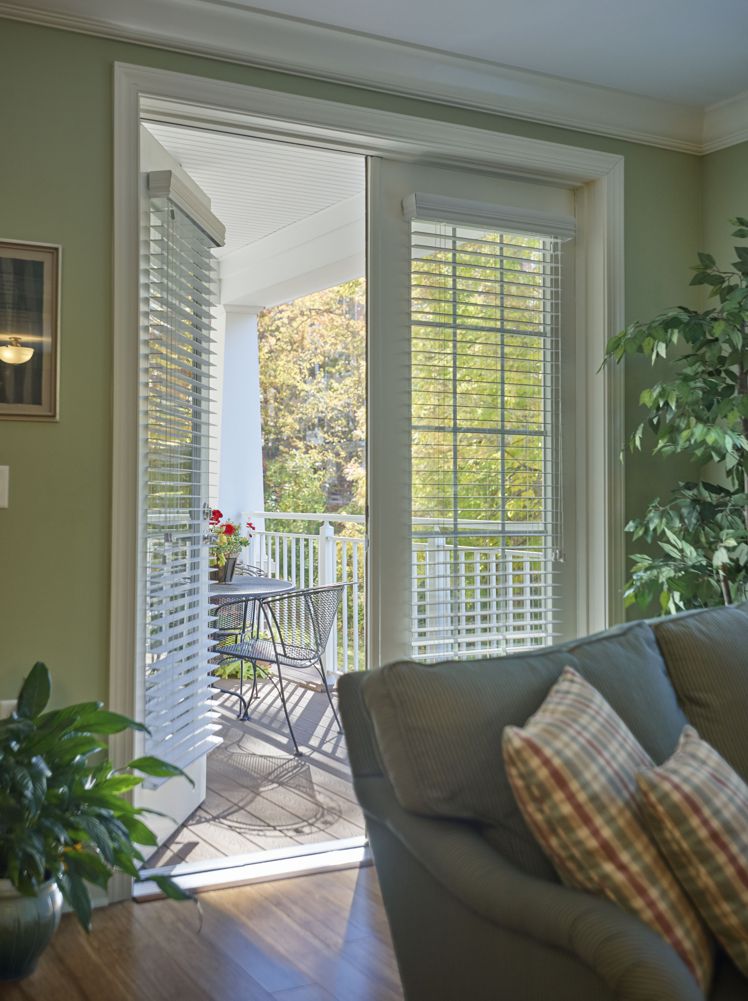
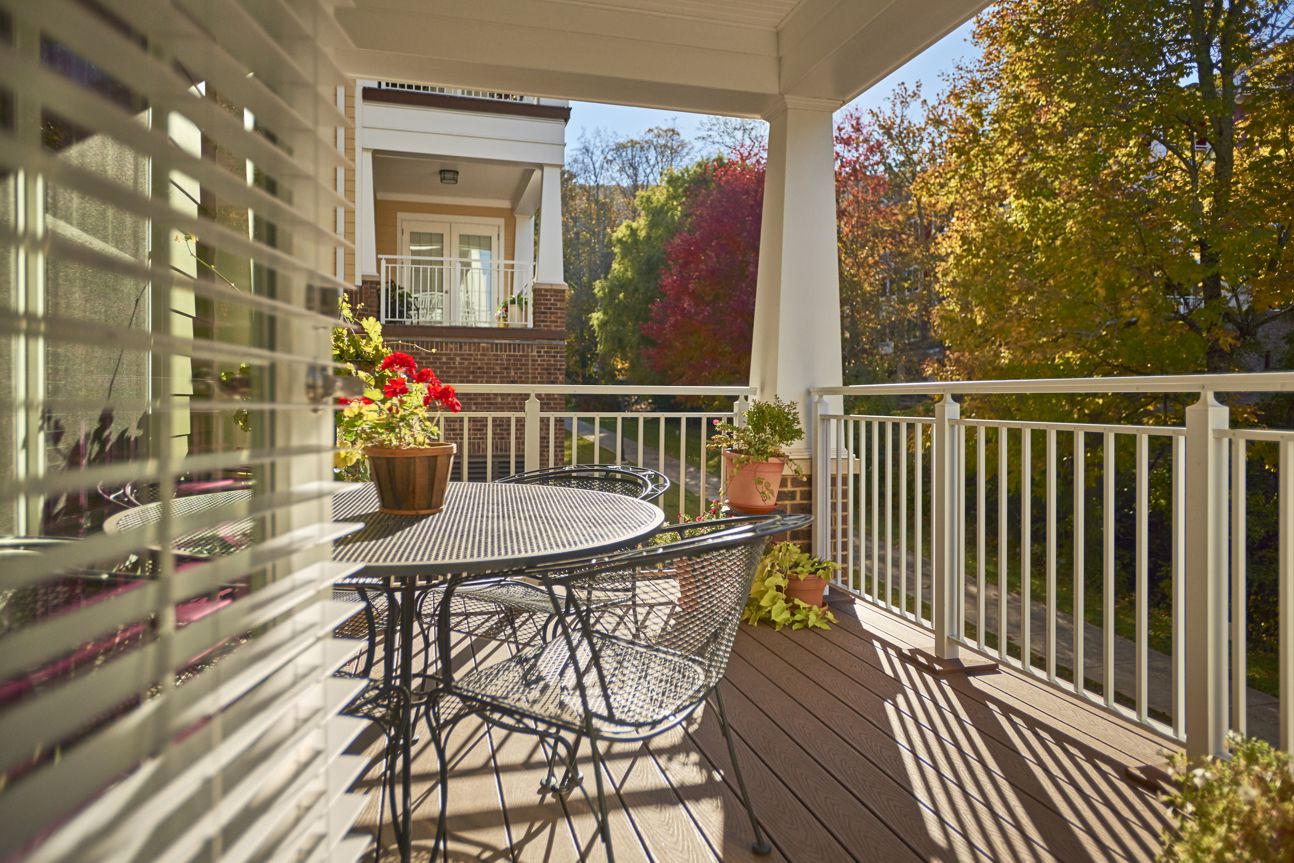
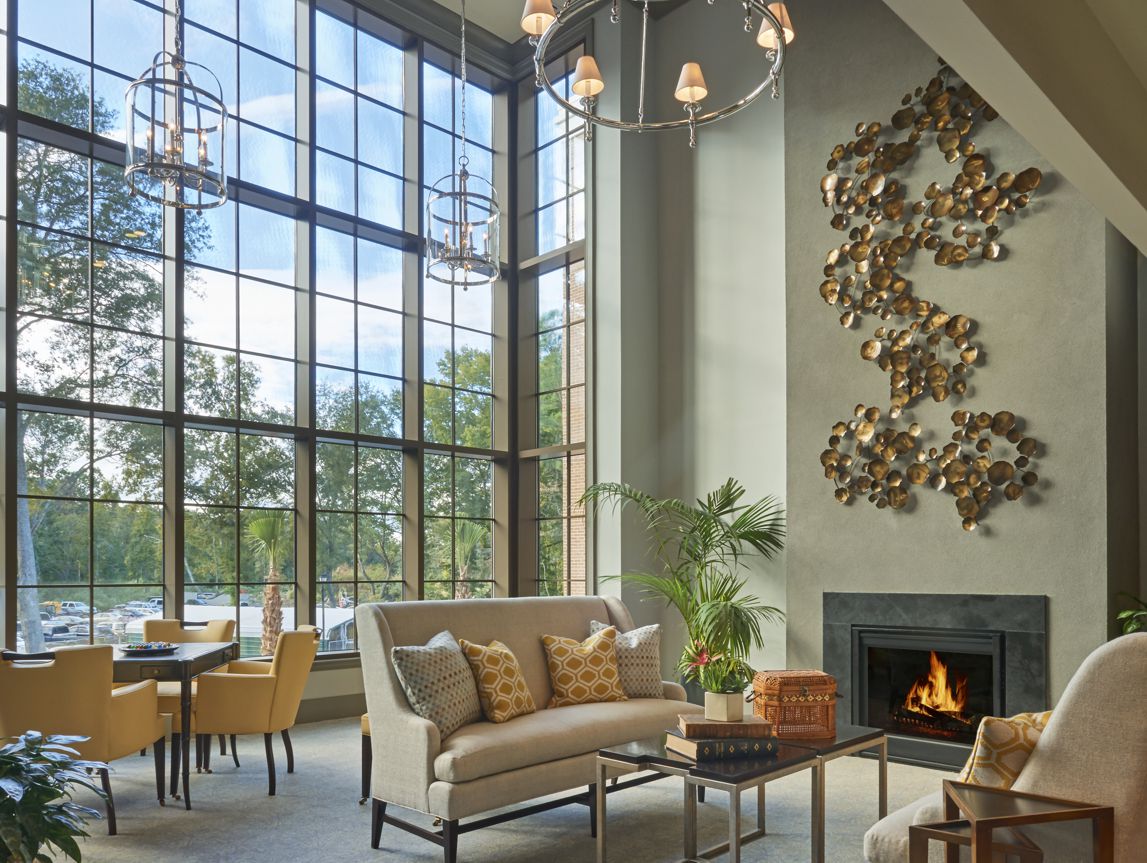
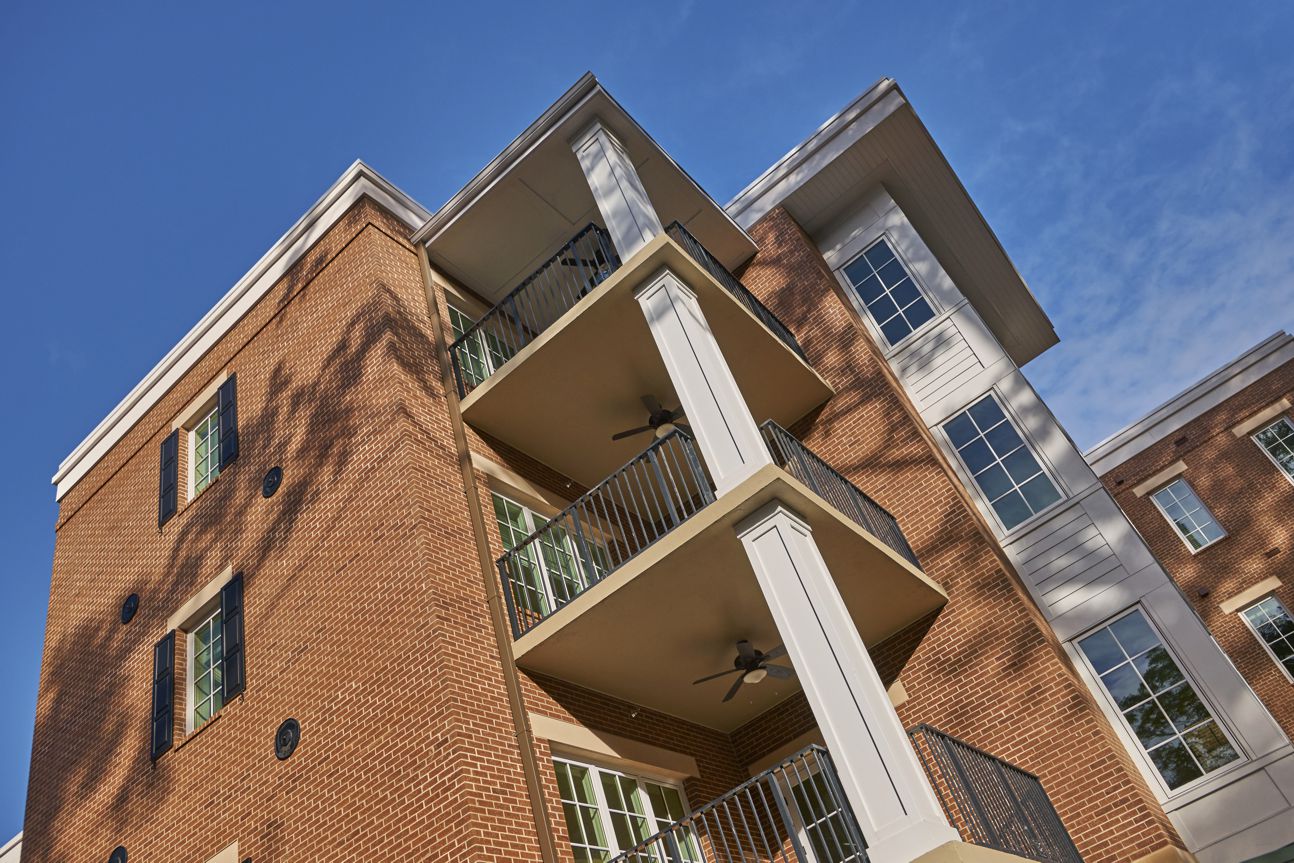
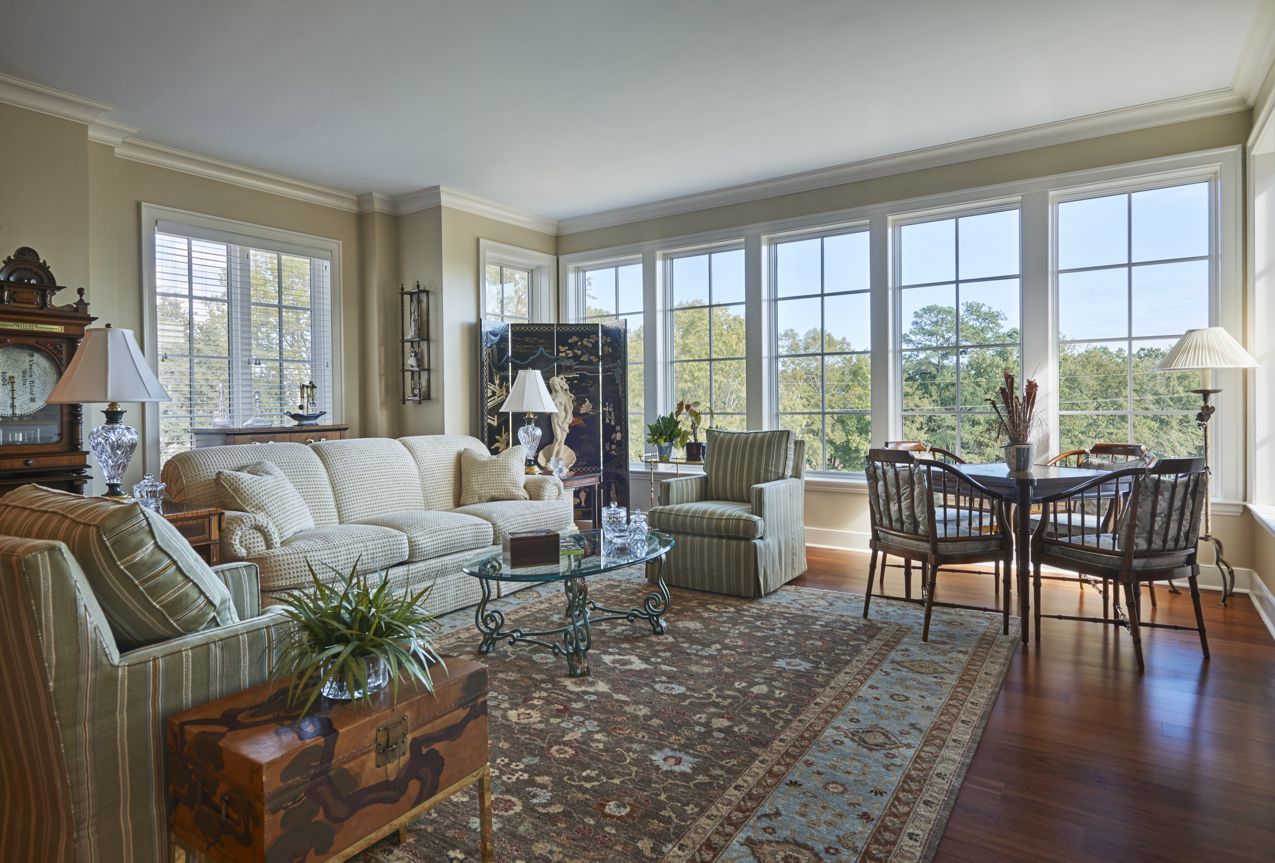
Hybrid homes are generally three- to five-story structures. On the ground floor is a covered parking area for the vehicles of the residents and a larger community room for the whole building. The remaining upper floors provide residences. Each floor contains four or more units, with a central shared common area. The units are spacious and designed so that each has a corner, with plenty of windows and sunlight. The shared central area becomes a community gathering spot, where neighbors can socialize, hold parties, watch the big game and more. The design does not include any corridors, making it feel much less like a traditional apartment community. In this way, hybrid homes provide the best of both apartment and cottage living, making them an attractive addition to many campuses.

The hybrid home concept has been championed by RLPS Architects of Lancaster, Pennsylvania, which is continuing to have success with these units. Currently, the company has at least seven projects that are utilizing the hybrid home concept, with more on the horizon. Just this month, the residents will be moving into their new hybrid homes at The Langford at College Station in Texas. As this unit type becomes more ubiquitous in our space, we fully expect the demand for them to rise. Those communities that adopt these models early will be well-placed for future success.

This also leads us to wonder why hybrid homes have proven so popular so quickly. In our minds, it reinforces one of the major selling points of retirement living: community. Senior living sales professionals know that lifestyle and community are the most important factors in making a sale. While potential residents may fuss about amenities, floor plans and price, we know that if a person is sold on the spirit of the community, he or she will adjust his or her desires. Hybrid homes offer a new way to establish an “esprit de corps” for senior living providers, making it a very attractive and easy-to-sell option.

We took this question to Jodi Kreider, one of the partners at RLPS. Her thoughts definitely mirrored our own:

While the key ingredients of a hybrid home, like outdoor connections and small-scale community, are consistent, the final design solution is unique to each project based on community vernacular, site densities and consumer expectations in a particular market.

Many of our clients have turned to hybrid homes, not only to provide a new housing option on their campus, but also because they work well for incremental growth. These buildings are smaller than a traditional apartment, so there’s less marketing time and more financing options, allowing them to be phased in as they sell.

We definitely encourage you and your organization to review the hybrid home concept and see if there is a way to make it work for your organization. Capital construction projects come few and far between for most communities. Plan now to include hybrid homes in your future projects so that you aren’t left behind when your competitors do.

Photos courtesy of RLPS.

Sources:

https://www.rlps.com/project-keywords/hybrid-homes/

Subscribe to
Varsity Prime

Varsity has a podcast!

Our new podcast about longevity and aging offers fresh perspectives and interviews with industry leaders.